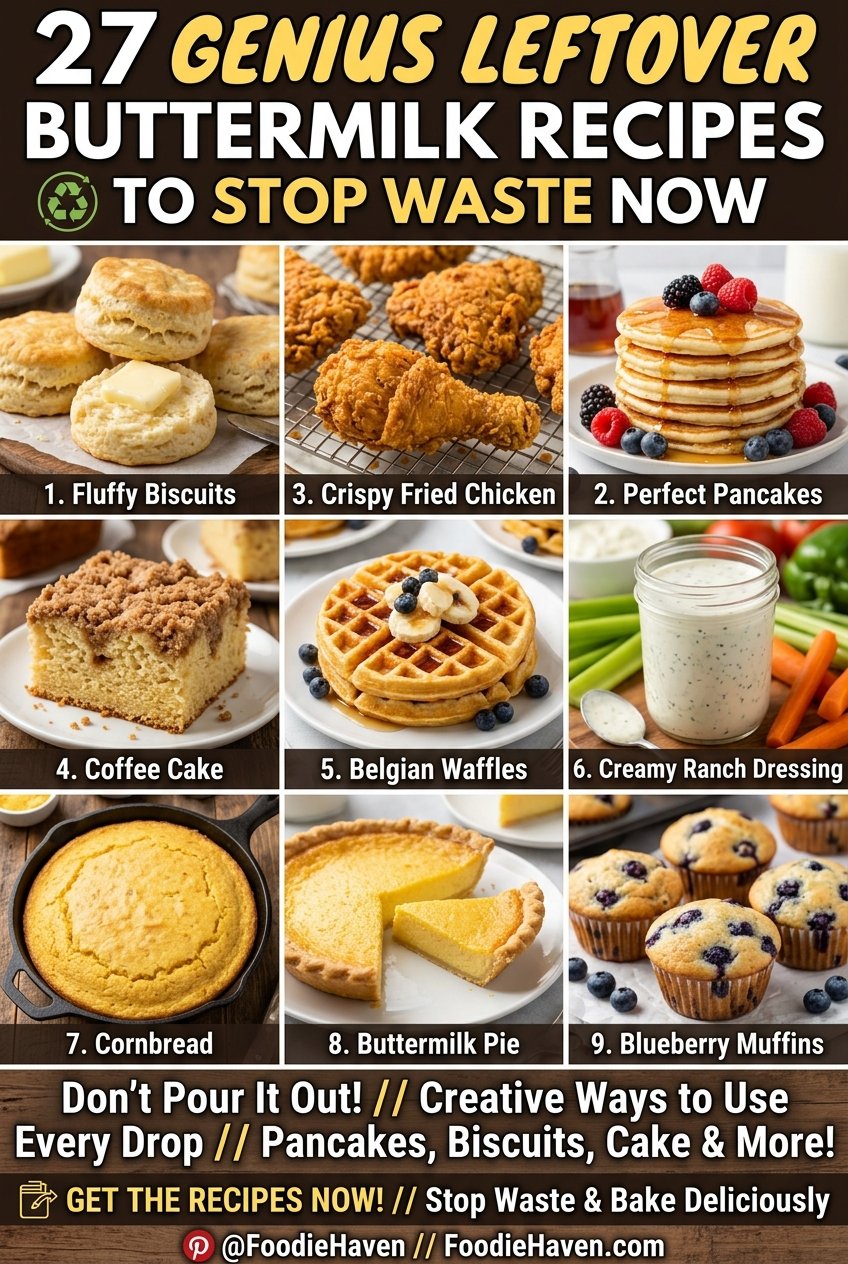
27 Genius Leftover Buttermilk Recipes to Stop Waste Now
We have all been there. You buy a quart of fresh buttermilk for a specific holiday recipe, use exactly half a cup, and then watch the rest sit in the back of your refrigerator, slowly ticking toward its expiration date. It is a classic kitchen dilemma. But here is the good news: buttermilk is one of the most versatile, transformative ingredients in your entire culinary arsenal. Instead of letting it go to waste, you can unlock its scientific magic to create incredibly tender baked goods, ultra-crispy fried foods, and rich, tangy sauces.
Whether you have a meager 3 tablespoons or a massive 2 and a half cups of buttermilk left over, this ultimate guide will show you exactly how to use buttermilk to elevate your cooking and baking. From world-class Southern biscuits to gourmet marinades, we will explore the science, storage, and step-by-step easy buttermilk recipes that make this tangy liquid a true kitchen superstar.
The Culinary Science: Why Buttermilk is a Kitchen MVP
Before diving into our treasure trove of leftover buttermilk recipes, it is crucial to understand what makes buttermilk so unique. Originally, buttermilk was the liquid left behind after churning butter from cultured cream. Today, commercial buttermilk is produced by introducing active lactic acid bacteria cultures to pasteurized low-fat or skim milk. This fermentation process gives buttermilk its signature sour taste, thick pourable texture, and unique chemical properties.
1. The Acid Factor (Leavening)
Buttermilk has a pH level of around 4.4 to 4.8, making it highly acidic. When you combine acidic buttermilk with basic baking soda (sodium bicarbonate), a chemical reaction occurs. This reaction produces carbon dioxide gas bubbles, which expand during cooking. This is the secret behind the sky-high rise and airy crumb structure in pancakes, biscuits, and quick breads. Without this acidity, your baked goods would remain dense and heavy.
2. Gluten Relaxation (Tenderness)
When wheat flour is mixed with water, proteins bind together to form gluten networks. While gluten is essential for structural integrity, too much of it makes baked goods tough and chewy. The acid in buttermilk weakens gluten strands, preventing them from becoming overly tight. This ensures that muffins, cakes, and scones maintain an incredibly tender, melt-in-your-mouth crumb.
3. Natural Tenderizer for Meats
Buttermilk is not just for baking. Its mild acidity acts as an exceptional tenderizer for poultry and meats without turning them mushy (unlike harsh vinegar- or citrus-based marinades). The lactic acid breaks down tough muscle fibers and collagen, allowing moisture to penetrate deep into the meat. This is why a buttermilk marinade is the golden standard for Southern fried chicken.
How to Store and Freeze Leftover Buttermilk
If you cannot use your leftover buttermilk immediately, do not throw it away! Buttermilk has a surprisingly long shelf life because its high acidity inhibits the growth of harmful bacteria. Kept in its original carton, it often remains perfectly usable for up to two weeks past the expiration date. However, for long-term preservation, freezing is your best option.
How to Freeze Buttermilk Step-by-Step:
- The Ice Cube Tray Method: Measure exactly 1 tablespoon of buttermilk into each well of a clean ice cube tray. Freeze until solid, then transfer the cubes to a heavy-duty freezer bag labeled with the date. When a recipe calls for a small amount of buttermilk, simply pop out the exact number of tablespoons you need.
- The Pre-Measured Jar Method: If you frequently bake recipes that require 1/2 cup or 1 cup of buttermilk, freeze the liquid in clean, freezer-safe glass jars or plastic containers in these exact increments. Leave at least half an inch of headspace at the top, as the liquid will expand as it freezes.
Note: Frozen buttermilk will separate when thawed. This is completely normal. Simply whisk it vigorously or blend it for a few seconds to emulsify the liquid before adding it to your batter or marinade.
Micro-Amounts: What to Do with 1 to 4 Tablespoons of Buttermilk
Even a tiny splash of leftover buttermilk can make a massive difference in your daily cooking. If you only have a few tablespoons left at the bottom of the carton, try these quick, high-impact culinary upgrades.
1. The Ultimate Homemade Ranch Dressing
Store-bought ranch dressings cannot compete with the bright, herbaceous flavor of a freshly made batch. If you have 3 to 4 tablespoons of buttermilk, you can whip up an exquisite dressing. In a small bowl, whisk together 4 tablespoons of buttermilk, 1/4 cup of mayonnaise, 2 tablespoons of sour cream, a squeeze of fresh lemon juice, and a pinch of garlic powder, onion powder, dried dill, and finely chopped fresh chives. Season generously with sea salt and cracked black pepper. This dressing makes salads sing and serves as an exceptional dip for fresh vegetables.
2. Elevated Scrambled Eggs
To achieve the fluffiest, most luxurious scrambled eggs of your life, swap out regular milk or water for buttermilk. Whisk 3 large eggs with 1.5 tablespoons of buttermilk and a pinch of salt. The lactic acid in the buttermilk breaks down the egg proteins, preventing them from binding too tightly as they cook. This results in soft, delicate, velvety curds when cooked slowly over low heat in melted butter.
3. Quick Pan Sauces for Pork or Chicken
After searing chicken breasts or pork chops in a pan, deglaze the skillet with a splash of white wine or chicken stock, scraping up all the delicious browned bits (fond) from the bottom. Lower the heat and whisk in 2 to 3 tablespoons of buttermilk and a teaspoon of Dijon mustard. Let the sauce simmer gently for one minute until it thickens into a rich, tangy, restaurant-quality pan sauce that cuts through the richness of the meat.
4. Tenderizing Pie Crust Upgrade
When making a flaky pie crust, replace the traditional ice water with 2 to 3 tablespoons of ice-cold buttermilk. The acid in the buttermilk inhibits gluten formation in the pastry flour, ensuring your crust remains incredibly tender, flaky, and beautifully golden brown once baked.
5. Creamy Tangy Coleslaw Dressing
Give your side dishes a tangy kick. Combine 3 tablespoons of buttermilk, 3 tablespoons of mayonnaise, 1 tablespoon of apple cider vinegar, 1 teaspoon of sugar, and a pinch of celery seed. Toss this dressing with finely shredded green cabbage, red cabbage, and grated carrots for a refreshing coleslaw that perfectly balances sweet and sour notes.
Moderate Amounts: What to Do with 1/4 to 1/2 Cup of Buttermilk
A quarter to a half-cup of buttermilk is the perfect volume for small-batch baking, creamy side dishes, and decadent glazes.
6. Gourmet Mashed Potatoes
Give your standard mashed potatoes a professional, gourmet makeover. Boil 2 pounds of Yukon Gold potatoes in salted water until fork-tender. Drain thoroughly, then mash them with 4 tablespoons of unsalted butter, a splash of heavy cream, and 1/2 cup of warm buttermilk. The buttermilk adds a delightful, sour-cream-like tang that cuts through the heavy starch and butter, resulting in incredibly balanced, fluffy mashed potatoes.
7. Sweet Tangy Buttermilk Glaze
Turn a simple pound cake, bundt cake, or batch of cinnamon rolls into an extraordinary treat. Whisk together 1/2 cup of sifted powdered sugar, 1.5 tablespoons of buttermilk, and a drop of pure vanilla extract. The buttermilk cuts down the cloying sweetness of the sugar, creating a beautifully balanced, semi-translucent glaze that sets up wonderfully.
8. Small-Batch Oatmeal Scones
For a cozy morning treat, combine 1 cup of all-purpose flour, 1/2 cup of rolled oats, 1/4 cup of sugar, 1 teaspoon of baking powder, and a pinch of salt. Cut in 4 tablespoons of cold, cubed butter until the mixture resembles coarse crumbs. Gently fold in 1/2 cup of cold buttermilk and 1/3 cup of dried cranberries or chocolate chips. Shape into a disc, cut into 6 wedges, and bake at 400°F (200°C) for 15-18 minutes until golden brown.
9. Probiotic Breakfast Smoothies
Buttermilk is packed with beneficial live cultures, similar to kefir or yogurt. Boost your digestive health by blending 1/2 cup of buttermilk with a frozen banana, 1/2 cup of frozen berries, a tablespoon of honey, and a handful of fresh spinach. The natural acidity of the buttermilk pairs beautifully with sweet fruits, creating a refreshing, nutrient-dense breakfast smoothie.
10. Creamy Avocado Lime Aioli
Blend the flesh of 1 ripe avocado with 1/2 cup of buttermilk, the juice of one lime, a clove of fresh garlic, and a handful of fresh cilantro. This vibrant, creamy green sauce is incredible when drizzled over fish tacos, grilled shrimp skewers, or used as a dip for sweet potato fries.
11. Easy Buttermilk Cornbread Muffins
If you want moist, sweet cornbread muffins that don’t crumble into dust, buttermilk is your savior. Mix together 1/2 cup of yellow cornmeal, 1/2 cup of flour, 2 tablespoons of sugar, 1 teaspoon of baking powder, 1/4 teaspoon of baking soda, and a pinch of salt. Whisk in 1/2 cup of buttermilk, 1 melted tablespoon of butter, and 1 egg. Pour into muffin tins and bake at 400°F (200°C) for 15 minutes.
Medium Amounts: What to Do with 1/2 to 1 Cup of Buttermilk
With half a cup to a full cup of leftover buttermilk, you have entered serious baking territory. This is the sweet spot for classic breakfast favorites and decadent desserts.
12. The Ultimate Fluffy Buttermilk Pancakes
Forget boxed mixes. Making scratch-made buttermilk pancakes is incredibly simple and produces vastly superior results. The reaction between buttermilk and baking soda creates an airy, thick batter that cooks up into exceptionally light, pillowy pancakes.
Ingredients:
- 1 cup all-purpose flour
- 1 tablespoon sugar
- 1 teaspoon baking powder
- 1/2 teaspoon baking soda
- 1/4 teaspoon salt
- 1 cup buttermilk
- 1 large egg
- 2 tablespoons unsalted butter, melted and cooled slightly
Instructions:
- In a large bowl, whisk together the dry ingredients (flour, sugar, baking powder, baking soda, and salt).
- In a separate bowl, whisk together the buttermilk, egg, and melted butter.
- Pour the wet ingredients into the dry ingredients. Using a rubber spatula, fold the mixture together gently until just combined. Do not overmix! The batter should be thick and lumpy. Overmixing activates gluten, making the pancakes tough.
- Let the batter rest for 10 minutes. You will see bubbles forming on the surface as the acid and base react.
- Heat a non-stick griddle over medium heat and grease lightly with butter. Scoop 1/4 cup of batter per pancake. Cook until bubbles pop on the surface and the edges look set, then flip and cook until the second side is golden brown.
13. Ultra-Moist Banana Buttermilk Bread
Bananas provide excellent flavor and moisture, but adding 1/2 cup of buttermilk to your banana bread recipe takes it to a whole new level of tenderness. The acidity ensures that the crumb remains tight yet incredibly moist, extending the shelf life of your loaf so it stays fresh and delicious for days.
14. Rich Chocolate Buttermilk Cake
There is a secret reason why high-end bakeries serve incredibly rich, moist chocolate cakes: they use buttermilk. Cocoa powder is naturally drying and can make cakes taste dusty. Combining 1 cup of buttermilk with your cake batter hydrates the cocoa powder while tenderizing the flour, resulting in a deep chocolate flavor and a velvety, melt-in-your-mouth texture.
15. Southern Buttermilk Cornbread
Traditional Southern cornbread relies heavily on the tangy contrast of buttermilk. Combine 1 cup of yellow cornmeal, 1/2 cup of flour, 1 teaspoon of baking powder, 1/2 teaspoon of baking soda, and 1 teaspoon of salt. Whisk in 1 cup of buttermilk, 1 large egg, and 4 tablespoons of melted lard or butter. Pour the batter into a smoking-hot, greased cast-iron skillet and bake at 425°F (220°C) for 20 minutes for a crispy, golden crust.
16. Crispy Fried Green Tomatoes
A Southern classic! Slice firm green tomatoes into 1/4-inch rounds. Season with salt and pepper, then dredge them in flour. Dip the floured slices into 1 cup of buttermilk (which helps the coating stick), then dredge them in a mixture of fine yellow cornmeal and breadcrumbs. Pan-fry in hot vegetable oil until golden brown and crispy on both sides.
17. Bakery-Style Blueberry Muffins
To prevent your blueberries from sinking to the bottom of your muffins, you need a thick batter. Using 1 cup of buttermilk creates a sturdy, highly active batter that suspends the berries beautifully while baking. The result is a tall, domed muffin top and a soft, tender interior that rivals your favorite local bakery.
18. Savory Buttermilk Herb Marinade for Pork Chops
Whisk 1 cup of buttermilk with 2 minced garlic cloves, 1 tablespoon of chopped rosemary, 1 tablespoon of chopped thyme, 1 tablespoon of olive oil, and 1 teaspoon of black pepper. Submerge 4 thick-cut bone-in pork chops in this mixture and marinate in the refrigerator for 4 to 8 hours. The buttermilk will gently break down the meat’s proteins, resulting in incredibly juicy, tender chops when grilled or pan-seared.
Large Amounts: What to Do with 1 to 2.5 Cups of Buttermilk
If you have a nearly full container of buttermilk, you are in luck. Large quantities allow you to tackle legendary culinary projects, including the ultimate Southern comfort foods.
19. Authentic Southern Mile-High Buttermilk Biscuits
If you want to master the art of baking, a classic Southern biscuit is the ultimate test. The secret to those beautiful, flaky, pull-apart layers is the interaction between cold butter, hot oven air, and a generous amount of cold buttermilk.
Ingredients:
- 2.5 cups all-purpose flour (preferably a low-protein flour like White Lily)
- 1 tablespoon baking powder
- 1/2 teaspoon baking soda
- 1 teaspoon fine sea salt
- 8 tablespoons (1 stick) unsalted butter, extremely cold
- 1.25 cups cold buttermilk
Instructions:
- Preheat your oven to 450°F (230°C) and line a baking sheet with parchment paper.
- In a large bowl, whisk together the flour, baking powder, baking soda, and salt.
- Using a box grater, grate the cold butter directly into the flour mixture. Gently toss with your hands to coat the butter strands in flour.
- Make a well in the center of the dry ingredients and pour in the cold buttermilk. Using a wooden spoon or your hands, stir gently just until a shaggy dough forms. Do not overwork the dough!
- Turn the dough out onto a lightly floured surface. Pat it into a rectangle. Fold the dough in half, turn it 90 degrees, and pat it down again. Repeat this folding process 5 to 6 times. This creates the laminated layers that make biscuits flaky.
- Pat the dough down to about 1 inch thickness. Using a sharp, floured 2.5-inch biscuit cutter, press straight down into the dough. Do not twist the cutter! Twisting seals the edges of the dough, preventing the biscuits from rising.
- Place the biscuits on the prepared baking sheet so they are touching. Placing them close together helps them push off each other and rise higher.
- Bake for 12 to 15 minutes until the tops are beautifully golden brown. Brush immediately with melted butter and serve hot.
20. Crispy Buttermilk Fried Chicken Brine
This is the ultimate use for 2 to 2.5 cups of buttermilk. If you want juicy, tender fried chicken with a thick, craggy crust, a buttermilk brine is non-negotiable.
The Brining Process:
Pour 2.5 cups of buttermilk into a large bowl. Whisk in 1 tablespoon of kosher salt, 1 tablespoon of sweet paprika, 1 tablespoon of garlic powder, 1 teaspoon of onion powder, and 1 teaspoon of cayenne pepper. Submerge your chicken pieces (breasts, thighs, drumsticks) in the liquid, cover, and refrigerate for at least 4 hours, or ideally overnight. The lactic acid tenderizes the chicken fibers, while the salt penetrates deep into the meat, ensuring it stays incredibly juicy during the frying process.
The Frying Process:
When ready to cook, remove the chicken from the brine, letting the excess drip off. Dredge the chicken directly into seasoned flour. To get those extra-crispy, craggy bits on the crust, drizzle 3 tablespoons of the buttermilk brine directly into your flour mixture and rub it in with your fingers to create small clumps before breading the chicken. Fry in hot peanut or vegetable oil at 350°F (175°C) until the internal temperature reaches 165°F (74°C).
21. Classic Southern Buttermilk Pie
If you have never tasted a classic Southern buttermilk pie, you are missing out on one of the greatest desserts in American culinary history. It features a custard-like filling baked in a flaky pie crust. The buttermilk cuts through the sweetness, providing a delicate, tangy custard flavor that is incredibly sophisticated.
Ingredients:
- 1 unbaked 9-inch pie crust
- 1.5 cups sugar
- 3 tablespoons all-purpose flour
- 3 large eggs, room temperature
- 1/2 cup unsalted butter, melted and cooled
- 1 cup buttermilk
- 1 tablespoon lemon juice
- 1 teaspoon pure vanilla extract
- A pinch of freshly grated nutmeg
Instructions:
- Preheat your oven to 350°F (175°C).
- In a large bowl, whisk together the sugar and flour. Whisk in the eggs one at a time until smooth.
- Slowly pour in the melted butter, buttermilk, lemon juice, vanilla extract, and nutmeg. Whisk vigorously until the mixture is completely uniform.
- Pour the filling into your unbaked pie crust.
- Bake for 45 to 50 minutes, or until the center is set but still has a slight, gentle jiggle. If the crust begins to brown too quickly, shield the edges with aluminum foil.
- Allow the pie to cool completely at room temperature for at least 2 hours before slicing. This allows the custard to set beautifully. Serve chilled or at room temperature.
22. Extra-Crispy Fried Onion Rings
Achieve restaurant-quality onion rings at home. Slice 2 large sweet onions (such as Vidalia) into 1/2-inch thick rings. Separate the rings and submerge them in 1.5 cups of buttermilk for 30 minutes. The buttermilk mellows out the harsh, sulfurous bite of the raw onions while helping the breading stick. Dredge the soaked rings in seasoned flour, dip them back into the buttermilk, coat them in panko breadcrumbs, and fry in hot oil until deeply golden and shatteringly crisp.
23. Traditional Irish Soda Bread
Irish soda bread is a yeast-free bread that relies entirely on the reaction between buttermilk and baking soda for its rise. Combine 4 cups of all-purpose flour, 1 teaspoon of baking soda, 1 teaspoon of salt, and 1 tablespoon of sugar. Stir in 1.75 cups of buttermilk until a soft dough forms. Shape into a round loaf, cut a deep ‘X’ into the top to allow steam to escape, and bake at 425°F (220°C) for 35 to 40 minutes for a rustic, hearty bread with a thick, crunchy crust.
24. Creamy Chilled Cucumber Buttermilk Soup
Perfect for hot summer days, this refreshing, no-cook soup utilizes 2 cups of buttermilk. In a high-powered blender, combine 2 cups of cold buttermilk, 2 large English cucumbers (peeled and chopped), 1 clove of garlic, 2 tablespoons of fresh dill, 1 tablespoon of lemon juice, and a pinch of salt. Blend until completely smooth and velvety. Chill in the refrigerator for at least 1 hour before serving, garnished with a drizzle of extra virgin olive oil and fresh dill.
25. Decadent Buttermilk Waffles
Waffles made with buttermilk boast an incredibly crispy exterior and a light, airy, almost soufflé-like interior. Whisk together 2 cups of flour, 2 tablespoons of sugar, 1 teaspoon of baking powder, 1/2 teaspoon of baking soda, and 1/2 teaspoon of salt. In another bowl, beat 2 egg yolks with 2 cups of buttermilk and 1/2 cup of melted butter. Fold the wet ingredients into the dry. In a separate bowl, whip the 2 egg whites to stiff peaks, then gently fold them into the batter. Cook in your waffle iron until steam stops rising for the crispiest waffles ever.
26. Tangy Sourdough-Style Yeast Bread
If you love the tangy taste of sourdough but don’t want to spend days maintaining a starter, use buttermilk as the liquid component in your favorite yeast bread recipe. Replace the water or milk 1:1 with warm buttermilk (around 110°F/43°C). The lactic acid mimics the complex, tangy flavor profile of wild sourdough yeast, yielding a loaf with a beautiful crumb and a rustic aroma.
27. Creamy Buttermilk Ranch Pasta Salad
Upgrade your next barbecue side dish. Boil 1 pound of rotini or penne pasta until al dente, then rinse under cold water to stop the cooking process. In a large bowl, whisk together 1.5 cups of buttermilk, 1/2 cup of sour cream, 1/2 cup of mayonnaise, 1 packet of ranch seasoning, and a splash of pickle juice. Toss the pasta with the dressing, adding diced cherry tomatoes, crisp bacon bits, sliced black olives, and cubed cheddar cheese for a crowd-pleasing side dish.
DIY Buttermilk Substitutes: What to Do If You Run Out
While this guide focuses on using up leftover buttermilk, you might occasionally find yourself in the opposite situation: you need buttermilk for a recipe but have none in your fridge. Fortunately, you can easily create a buttermilk substitute at home using common pantry staples.
| Substitute Method | Ingredients Needed | Best Used For |
|---|---|---|
| Lemon Juice Method | 1 cup of whole milk + 1 tablespoon of fresh lemon juice. Let sit for 5-10 minutes until slightly curdled. | Pancakes, quick breads, and general baking. |
| White Vinegar Method | 1 cup of whole milk + 1 tablespoon of white distilled vinegar. Let sit for 5 minutes. | Cakes, muffins, and biscuits. |
| Cream of Tartar Method | 1 cup of milk + 1.75 teaspoons of cream of tartar. Whisk thoroughly to dissolve. | Cookies and scones. |
| Yogurt/Sour Cream Method | 3/4 cup of plain unsweetened yogurt or sour cream + 1/4 cup of water or milk to thin it out. | Marinades, dressings, and thick cake batters. |
Crucial Tip: While these buttermilk substitutes work phenomenally well in a pinch to activate leavening agents, they do not possess the exact same viscosity or complex flavor compounds as real, cultured buttermilk. For recipes where buttermilk is the star ingredient (such as buttermilk pie or Southern biscuits), we highly recommend using the real deal for the best culinary results.
Frequently Asked Questions (FAQs)
Can I use buttermilk in place of regular milk in any recipe?
No, you cannot substitute buttermilk for regular milk on a 1:1 basis without adjusting the other ingredients. Because buttermilk is highly acidic, it will react with any baking soda in the recipe, causing it to rise prematurely. Additionally, it will neutralize the acid balance, altering the texture and flavor of your baked goods. If you want to use buttermilk instead of milk, you must reduce the amount of baking powder and add a pinch of baking soda to balance the acidity.
How can I tell if my leftover buttermilk has actually gone bad?
Because buttermilk is already sour and contains active bacterial cultures, it can be tricky to tell when it has truly spoiled. Look for these clear signs of spoilage: heavy, thick mold growing on the surface or around the rim of the carton, a strong, putrid, yeast-like odor (different from its normal pleasant, clean sour tang), or a completely solid, chunky consistency that does not pour. If it passes the smell and sight test but is simply separated, a quick stir will make it perfectly safe to use.
Is buttermilk high in fat?
Contrary to its rich, decadent name, modern commercial buttermilk is actually remarkably low in fat. Because it is traditionally made from the liquid left over after butter fatty solids are removed, most store-bought buttermilk is produced using skim or low-fat (1%) milk. It typically contains fewer calories and less fat than standard whole milk, making it an excellent way to add rich texture and moisture to recipes without adding excess fat.
Can I freeze buttermilk in its original paper carton?
It is not recommended to freeze buttermilk directly in its original paper carton. As liquids freeze, they expand. Paper cartons can rupture or tear at the seams, leading to a messy cleanup when thawing. Furthermore, paper cartons are not airtight, meaning your buttermilk will quickly absorb freezer odors and develop freezer burn. Always transfer your buttermilk to airtight, freezer-safe plastic containers, glass jars, or heavy-duty freezer bags.
Conclusion: Embrace the Tang
Stop viewing that half-empty carton of buttermilk as a ticking clock of food waste. Instead, see it for what it truly is: a ticket to some of the most delicious, tender, and crispy culinary creations you can make in your kitchen. Whether you are whipping up a batch of legendary Southern biscuits, upgrading your weekday mashed potatoes, or brining the juiciest fried chicken your family has ever tasted, buttermilk is the secret weapon that elevates home cooking to professional heights.
The next time you find yourself with leftover buttermilk, consult this guide, check your quantity, and start cooking. Your tastebuds—and your grocery budget—will thank you.