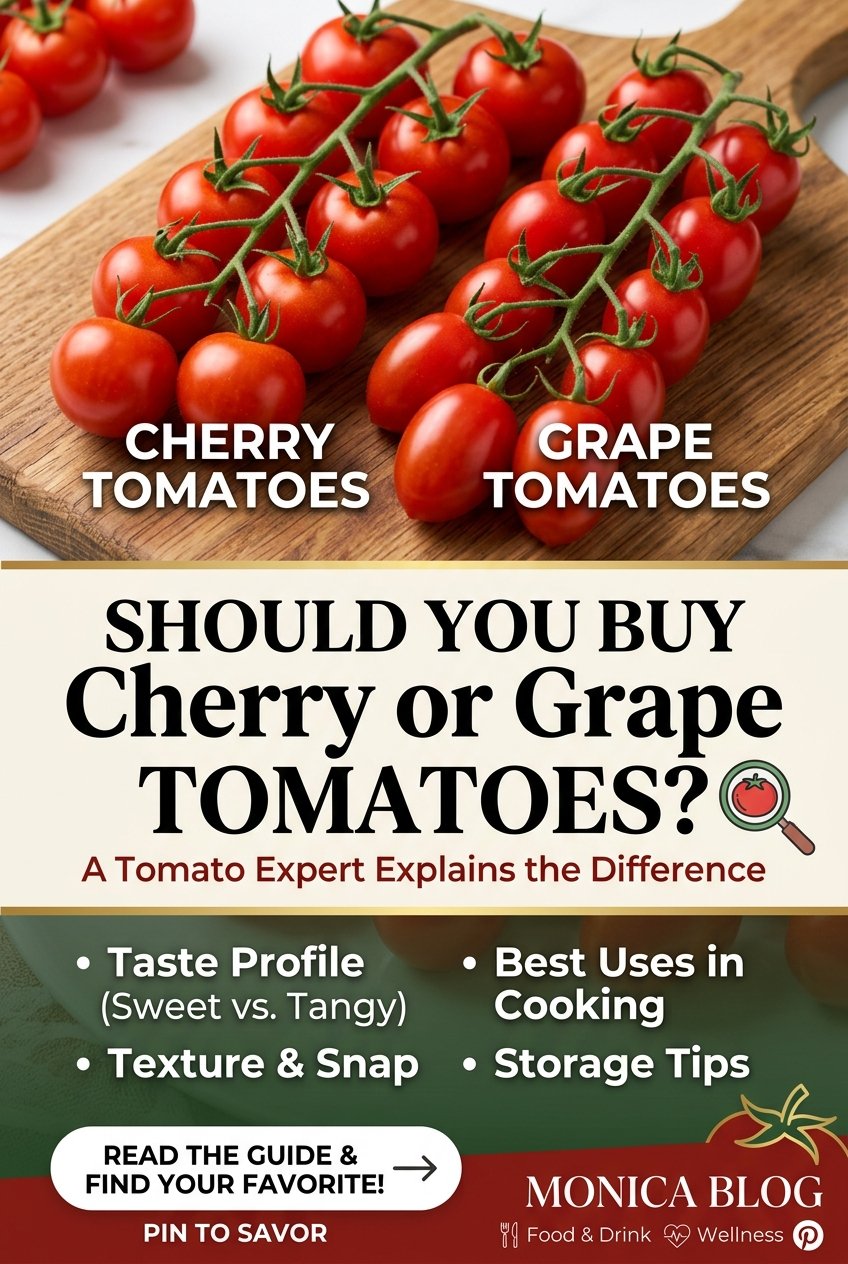
Cherry vs Grape Tomatoes: The Ultimate Culinary Difference
Walking down the produce aisle of your local grocery store or strolling through a vibrant weekend farmer’s market can be a sensory delight. Among the mounds of leafy greens, vibrant peppers, and earthy root vegetables, you will inevitably encounter the small tomato section. Here, baskets of bite-sized red, orange, and yellow globes sit side-by-side. To the untrained eye, they might look like simple variations of the same ingredient. However, a culinary expert or avid gardener knows that the choice between cherry tomatoes vs grape tomatoes can completely transform the texture, flavor profile, and structural success of your dish.
While both varieties belong to the nightshade family and offer a burst of fresh, acidic sweetness, they are not entirely interchangeable. Their moisture content, skin thickness, sugar concentration, and structural integrity under heat differ significantly. Understanding these nuances is key to elevating your home cooking from good to spectacular. Whether you are tossing together a crisp summer salad, simmering a rich pasta sauce, or preparing a elegant sheet-pan dinner, choosing the correct small tomato is crucial.
In this comprehensive, definitive guide, we will unpack the science, history, culinary applications, and nutritional landscapes of both cherry and grape tomatoes. By the end of this deep dive, you will possess the expert-level knowledge required to make informed decisions in the kitchen and the garden, ensuring every meal you prepare is optimized for maximum flavor and texture.
1. The Botanical Lineage and History of Small Tomatoes
To truly understand the difference between cherry and grape tomatoes, we must look at their botanical history. All modern tomatoes trace their ancestry back to the wild tomato species native to the Andean region of South America, encompassing parts of modern-day Peru, Ecuador, and Chile. These wild ancestors, scientifically known as Solanum pimpinellifolium (commonly called the currant tomato), produced tiny, pea-sized fruits that grew in long, weeping clusters.
Over centuries of cultivation and natural mutation, these wild fruits migrated northward into Central America and Mexico, where indigenous Mesoamerican civilizations actively domesticated them. By the time Spanish conquistadors arrived in the Americas, a diverse array of tomato sizes, shapes, and colors existed. However, the specific path that led to our modern commercial cherry and grape tomatoes is a fascinating study in selective agricultural breeding.
The Rise of the Cherry Tomato
The cherry tomato (Solanum lycopersicum var. cerasiforme) is believed to be a direct intermediary ancestor between the wild currant tomato and the massive domesticated beefsteak varieties we see today. Cultivated throughout Central America, they were introduced to Europe in the 16th century alongside their larger counterparts. However, for centuries, Europeans viewed tomatoes with suspicion, often growing them purely as ornamental plants due to their botanical relationship with toxic nightshades.
It was not until the late 19th and early 20th centuries that the cherry tomato gained global culinary traction. A pivotal moment in cherry tomato history occurred in the late 1970s and early 1980s. Marks & Spencer, a prominent British retailer, sought a small, consistently sweet tomato that could be sold year-round. They collaborated with Israeli scientists, notably those at the Hebrew University of Jerusalem led by Professor Nahum Kedar and Professor Chaim Rabinowitch. This research led to the development of highly stable, sweet, and disease-resistant cherry tomato cultivars that revolutionized the global produce market. The most famous of these breeding triumphs is the legendary “Tomaccio” variety, celebrated for its intense sugar concentration and capacity for sun-drying.
The Emergence of the Grape Tomato
In contrast to the ancient lineage of the cherry tomato, the grape tomato is a relatively modern innovation in agricultural history. Originating in Southeast Asia, specifically Taiwan, grape tomatoes were bred to address some of the commercial shortcomings of the traditional cherry tomato—namely, their delicate skin and high water content, which made them prone to bruising, splitting, and rapid spoilage during transport.
In the late 1990s, a Florida-based grower named Santa Sweets, Inc. imported a specific grape tomato variety known as “Santa F1” from the Known-You Seed Company of Taiwan. This variety boasted an oblong, grape-like shape, thick skin, a meaty interior, and an incredibly sweet flavor. The commercial success of the Santa F1 variety took the North American market by storm, establishing “grape tomatoes” as a distinct, highly sought-after category in supermarket produce aisles. For more details on agricultural histories and cultivar registrations, you can refer to the official genetic archives of the U.S. Department of Agriculture.
2. Physical Anatomy: Cherry vs. Grape Tomatoes
The easiest way to distinguish between these two bite-sized powerhouses is through a physical inspection. Their external aesthetics and internal architectures dictate how they behave when subjected to various culinary preparation methods.
| Characteristic | Cherry Tomatoes | Grape Tomatoes |
|---|---|---|
| Shape | Perfectly spherical, round, and plump (resembling actual cherries). | Oblong, elongated, and oval (resembling green or red table grapes). |
| Skin Thickness | Very thin, delicate, and prone to splitting under pressure or heat. | Thick, taut, and resilient; highly resistant to bruising and cracking. |
| Internal Structure | High seed count suspended in a large volume of liquid locular gel. | Meaty, dense sarcocarp (flesh) with fewer seeds and minimal liquid. |
| Average Size | Slightly larger; typically ranging from 0.75 to 1.5 inches in diameter. | Slightly smaller and uniform; typically 0.5 to 1 inch in length. |
| Shelf Life | Short; must be consumed within a few days of harvesting to prevent softening. | Long; can remain firm and fresh on the counter for up to two weeks. |
A Closer Look at Cherry Tomato Anatomy
When you slice a cherry tomato in half, you are immediately met with a burst of moisture. The interior of a cherry tomato is dominated by two or more large locular cavities filled with seeds suspended in a gelatinous fluid. This fluid is rich in free amino acids, particularly glutamic acid, which is responsible for the deep umami flavor associated with tomatoes.
Because the skin of the cherry tomato is incredibly thin, the structural integrity of the fruit relies almost entirely on the internal turgor pressure of the water within its cells. This thin skin provides a satisfying, explosive “pop” when you bite into a whole, ripe cherry tomato. However, this same delicate anatomy means that cherry tomatoes can easily rupture in shipping containers or split open on the vine after heavy rainfall.
Decoding the Grape Tomato Anatomy
If you cut a grape tomato in half lengthwise, you will notice a vastly different internal landscape. The walls of the fruit (the pericarp) are significantly thicker, more fibrous, and much denser than those of the cherry tomato. The locular cavities are small, compact, and contain far less liquid gel. Instead of a watery explosion, biting into a grape tomato yields a distinct, meaty crunch.
This anatomical configuration is highly advantageous for commercial growers, distributors, and consumers alike. The thick skin acts as a protective shield, allowing grape tomatoes to be harvested mechanically, packed tightly in clam-shell containers, shipped thousands of miles, and stored on kitchen countertops for extended periods without degrading in quality.
3. Flavor Chemistry: Sweetness, Acidity, and Umami
To understand why these small fruits taste so different, we must explore the biochemistry of tomato flavor. The flavor of a tomato is primarily determined by three components: sugars (mainly fructose and glucose), acids (primarily citric and malic acids), and volatile organic compounds (aromatic chemicals perceived through the olfactory system).
The Sugary Sweetness of Cherry Tomatoes
Cherry tomatoes are famous for their high sugar content. In the agricultural world, sugar concentration is measured using the Brix scale, which calculates the percentage of soluble solids in a liquid. While a standard, large beefsteak tomato might have a Brix rating of 4 to 5, high-quality cherry tomatoes regularly register Brix levels between 8 and 11.
This high sugar concentration is balanced by a vibrant, bright acidity. Because cherry tomatoes contain a high volume of locular gel (which houses a high concentration of citric acid), they deliver a complex, dual-note taste experience: an initial rush of sugary sweetness followed by a tangy, refreshing finish. Furthermore, cherry tomatoes are rich in volatile compounds that impart floral, fruity, and grassy aromas, enhancing our brain’s perception of sweetness.
The Mild, Consistent Profile of Grape Tomatoes
Grape tomatoes are also quite sweet, often possessing Brix ratings that rival cherry tomatoes. However, because they have a lower ratio of liquid-to-flesh, they contain less total citric acid. This results in a flavor profile that is sweeter but less acidic and complex than that of a cherry tomato. The flavor of a grape tomato is often described as mild, steady, and clean.
While a premium cherry tomato grown in ideal conditions will almost always outshine a grape tomato in terms of complex flavor depth, grocery store cherry tomatoes out of season can often taste bland and watery. In contrast, the engineered resilience of grape tomatoes allows them to maintain a consistent, sweet-enough baseline flavor and firm texture year-round, regardless of seasonal shifts.
4. Culinary Applications: When to Use Which Tomato
As a rule of thumb in the culinary arts, ingredients should be selected based on how their physical properties interact with heat, moisture, and other components in a dish. Let us examine how the distinct anatomical structures of cherry and grape tomatoes dictate their optimal culinary applications.
When to Unleash the Power of Cherry Tomatoes
Because of their high water content, thin skin, and complex acidity, cherry tomatoes excel in dishes where you want an explosive burst of juice, quick cooking times, or a bright, raw acid component.
- Raw Salads and Caprese: When serving tomatoes raw, the delicate, tender skin of a cherry tomato is far more pleasant to chew than the tough skin of a grape tomato. A classic Caprese salad featuring fresh buffalo mozzarella, fragrant basil leaves, extra virgin olive oil, and halved heirloom cherry tomatoes is a masterclass in texture and simplicity.
- Quick Pan-Bursting and Pasta Sauces: If you toss cherry tomatoes into a hot skillet with olive oil, garlic, and a pinch of salt, the thin skins will blister and rupture within minutes. The escaping juices mix with the olive oil to create a velvety, emulsified pan sauce. This is the foundation of the viral baked feta pasta and classic Italian quick-sauces like Spaghetti alla Checca.
- Skewering and Grilling (Shish Kabobs): When threaded onto skewers alongside meats and vegetables, cherry tomatoes quickly caramelize over the open flame. The intense heat of the grill coaxes out their natural sugars, while their high water content keeps them juicy, preventing them from drying out on the grill.
- Juicing and Cold Soups: For applications like Gazpacho or tomato-based cocktails, the high liquid volume of cherry tomatoes makes them the ideal candidate for pureeing and straining, yielding a bright, intensely flavorful juice.
When to Rely on the Durability of Grape Tomatoes
The low moisture content, thick skin, and meaty texture of grape tomatoes make them the undisputed champions of dry-heat cooking, meal prep, and dishes where you do not want excess liquid water to dilute the final product.
- Slow Roasting and Confit: If you try to slow-roast cherry tomatoes for several hours, they will collapse into a watery puddle. Grape tomatoes, however, hold their shape beautifully. Roasting them at a low temperature (around 275°F/135°C) with olive oil, herbs, and garlic dehydrates them slightly, concentrating their sugars and yielding chewy, intensely savory tomato gems.
- Stir-Frying and High-Heat Sautéing: In fast-paced cooking methods like stir-frying, grape tomatoes can withstand the intense, direct heat without instantly breaking down and making the entire dish soggy. They soften slightly but retain a satisfying “bite.”
- Lunchboxes and Meal Prep: If you pack whole tomatoes in a school lunch or a picnic basket, grape tomatoes are the superior choice. Their tough skins resist bruising when jostled around in bags, and they will not burst and leak juices onto your sandwiches or snacks.
- Salads Destined for Longevity: If you are making a pasta salad, quinoa salad, or Greek salad that needs to sit in the refrigerator for a few days, use halved grape tomatoes. Because they contain very little liquid gel, they will not weep water into the salad dressing, preventing your dish from becoming soggy and bland.
5. In-Depth Cooking Techniques: Elevating Your Tomato Game
Now that we have established the theoretical differences, let us explore three precise, professional culinary techniques designed to maximize the natural strengths of both tomato varieties.
Technique 1: The Ultimate Blistered Cherry Tomato Pan Sauce
This technique relies on the rapid steam buildup inside the thin skin of the cherry tomato, causing it to burst and release its highly acidic, pectin-rich juices into the pan to form a natural emulsion.
- Heat a wide stainless steel or cast-iron skillet over medium-high heat. Add 3 tablespoons of high-quality extra virgin olive oil.
- Once the oil is shimmering but not smoking, add 2 cups of whole, dry cherry tomatoes. Do not crowd the pan; the tomatoes should sit in a single layer.
- Leave the tomatoes undisturbed for 2 to 3 minutes. You want them to develop deep, dark brown charred spots on their undersides.
- Gently shake the pan. You will hear the tomatoes begin to hiss and crack. Use the back of a wooden spoon to gently press down on any tomatoes that have not yet burst.
- Add 3 cloves of thinly sliced garlic, a pinch of red pepper flakes, and a teaspoon of kosher salt. Reduce the heat to medium and swirl the pan constantly for 1 minute to cook the garlic without burning it.
- Toss in 1/4 cup of starchy pasta water and your cooked pasta of choice. Swirl vigorously. The starch in the water, combined with the pectin from the cherry tomatoes and the olive oil, will create a glossy, restaurant-quality sauce. Finish with fresh basil and grated Parmigiano-Reggiano.
Technique 2: Slow-Roasted Grape Tomato Confit
This method utilizes the thick, resilient skin of the grape tomato to trap heat, while the dry environment of a low-temperature oven coaxes out excess moisture, turning the interior flesh into a sweet, jam-like spread.
- Preheat your oven to 300°F (150°C).
- In a baking dish or cast-iron skillet, place 3 cups of whole grape tomatoes.
- Pour in enough extra virgin olive oil to submerge the tomatoes halfway (about 1/2 to 3/4 cup).
- Add 4 to 5 smashed garlic cloves, 3 sprigs of fresh thyme, 1 sprig of fresh rosemary, and a generous pinch of flaky sea salt and freshly cracked black pepper.
- Roast in the oven for 1 to 1.5 hours. The tomatoes should look slightly wrinkled, plump, and tender, but they should still retain their overall oval shape.
- Allow the confit to cool. Transfer the tomatoes and the highly infused oil to a glass jar. Store in the refrigerator for up to two weeks. Use these as a topping for bruschetta, folded into goat cheese, or tossed into grain bowls.
Technique 3: Quick Pickled Grape Tomatoes
Because grape tomatoes have a firm, dense structure, they are the ideal candidate for quick-pickling. The vinegar brine penetrates the thick skin slowly, resulting in a tangy, crunchy condiment that cuts through rich meats and cheeses.
- Using a fine toothpick or a clean needle, prick each grape tomato once or twice. This allows the pickling liquid to penetrate the dense flesh without causing the tomato to collapse.
- Pack 2 cups of grape tomatoes tightly into a clean, heat-proof glass jar. Add 1 peeled garlic clove, 1/2 teaspoon of mustard seeds, and a sprig of fresh dill to the jar.
- In a small saucepan, combine 1 cup of white vinegar, 1/2 cup of water, 1 tablespoon of kosher salt, and 1.5 tablespoons of granulated sugar. Bring the mixture to a boil, stirring until the salt and sugar are completely dissolved.
- Pour the hot brine over the tomatoes, ensuring they are completely submerged.
- Let the jar cool to room temperature, seal with a lid, and transfer to the refrigerator. While they can be eaten after 24 hours, their flavor and texture will peak after 3 to 5 days of curing in the fridge.
6. Nutritional Profiles and Health Benefits
Whether you choose cherry or grape tomatoes, you are adding a nutrient-dense powerhouse to your plate. Both varieties are low in calories, virtually fat-free, and packed with essential vitamins, minerals, and bioactive phytochemicals.
The Power of Lycopene
Both cherry and grape tomatoes are exceptional sources of lycopene, a powerful carotenoid antioxidant responsible for giving tomatoes their vibrant red color. Lycopene has been studied extensively for its role in promoting human health. Research suggests that regular consumption of lycopene-rich foods can reduce the risk of cardiovascular disease by preventing the oxidation of low-density lipoprotein (LDL) cholesterol and lowering blood pressure.
Additionally, lycopene is renowned for its potential role in cancer prevention, particularly prostate cancer. It is important to note that lycopene is a fat-soluble compound. This means its absorption by the human body is significantly enhanced when tomatoes are consumed alongside healthy dietary fats, such as extra virgin olive oil or avocado. Furthermore, cooking tomatoes breaks down their cellular walls, increasing the bioavailability of lycopene. To explore clinical studies on carotenoids and human health, visit the Harvard T.H. Chan School of Public Health.
Vitamins and Minerals Breakdown
A single cup serving of small tomatoes provides a significant portion of your daily recommended intake for several vital nutrients:
- Vitamin C (Ascorbic Acid): A powerful antioxidant that supports immune function, skin health, and collagen synthesis. Cherry tomatoes, with their higher liquid content, often contain slightly higher concentrations of water-soluble Vitamin C.
- Vitamin A (Beta-Carotene): Essential for maintaining optimal vision, cellular growth, and immune system integrity.
- Vitamin K: Plays a crucial role in blood clotting and bone metabolism, helping the body utilize calcium efficiently.
- Potassium: An essential mineral and electrolyte that regulates fluid balance, nerve signals, and muscle contractions, contributing to healthy blood pressure levels.
Dietary Fiber and Hydration
Due to their high water-to-calorie ratio, both varieties are fantastic for promoting hydration and supporting weight management goals. A cup of cherry tomatoes contains approximately 94% water. The skins of both varieties, particularly the thicker skin of the grape tomato, provide insoluble dietary fiber, which aids in digestion, promotes gut health, and helps maintain a healthy microbiome.
7. How to Store Tomatoes for Optimal Flavor
One of the most common culinary mistakes made by home cooks occurs the moment they return home from the grocery store: placing their fresh tomatoes directly into the refrigerator. To preserve the flavor and texture of both cherry and grape tomatoes, it is vital to understand the science of tomato storage.
The Cold Temperature Trap
Tomatoes are tropical fruits by evolutionary design. When exposed to temperatures below 54°F (12°C), a biological process occurs that permanently alters their flavor profile. Cold temperatures damage the membranes within the fruit’s cells, halting the activity of critical enzymes responsible for synthesizing volatile aroma compounds.
Furthermore, cold temperatures trigger the breakdown of sugars and acids, resulting in a mealy, mushy texture and a bland, cardboard-like flavor. This damage is irreversible; once a tomato has been chilled for an extended period, returning it to room temperature will not restore its lost flavor enzymes.
Best Practices for Countertop Storage
For the best culinary experience, follow these storage guidelines:
- Keep Them at Room Temperature: Store your cherry and grape tomatoes on your kitchen countertop, away from direct sunlight, at a temperature between 60°F and 70°F (15°C to 21°C).
- Stem-Side Down: If your cherry tomatoes are still attached to their green vines (trusses), keep them attached until ready to use. If they are loose, store them with the stem scar facing downward on a flat surface. The area around the stem scar is the most vulnerable part of the tomato, where moisture escapes and bacteria can enter. Placing them stem-side down minimizes moisture loss and microbial entry.
- Allow for Airflow: Avoid stacking small tomatoes deep in a bowl, which can trap moisture at the bottom and lead to mold. Instead, spread them out on a plate or a shallow woven basket.
When Is Refrigeration Acceptable?
While room temperature is ideal, there are specific scenarios where the refrigerator becomes necessary:
- Over-Ripening: If your tomatoes have reached peak ripeness and you cannot consume them immediately, placing them in the refrigerator can temporarily halt the ripening process, preventing them from rotting. Be sure to remove them from the fridge at least 1 hour before consuming or cooking to allow them to warm up, which helps revive some of their volatile aromatic compounds.
- Sliced Tomatoes: Once you cut a cherry or grape tomato, its protective skin barrier is broken. Any cut tomatoes must be stored in an airtight container in the refrigerator and consumed within 2 to 3 days for food safety reasons.
8. Cultivating Bite-Sized Gems: Tips for the Home Gardener
For gardeners, growing cherry and grape tomatoes is highly rewarding. These small-fruited plants are generally more vigorous, productive, and disease-resistant than large heirloom beefsteak varieties, making them an excellent choice for both beginners and experienced horticulturists.
Understanding Growth Habits: Determinate vs. Indeterminate
Before purchasing seeds or seedlings from a nursery, you must understand the two primary growth habits of tomato plants:
- Indeterminate Varieties: These plants behave like climbing vines. They continue to grow, branch out, and produce flowers and fruit continuously throughout the growing season until they are killed by frost. Most classic cherry tomatoes, like ‘Sungold’ or ‘Super Sweet 100’, are indeterminate. They require heavy-duty caging, staking, or trellising, along with regular pruning of “suckers” (the small shoots that grow in the crotch between the main stem and the branches) to keep their growth manageable.
- Determinate Varieties: Often called “bush” tomatoes, these plants grow to a compact, predetermined size (usually 3 to 4 feet tall), set all of their fruit at once over a short period, and then decline. Many patio-friendly grape tomato varieties are determinate. They require minimal support, little to no pruning, and are the ideal candidates for container gardening on balconies, decks, or raised beds.
Essential Growing Conditions for Maximum Sugar Development
To ensure your home-grown cherry and grape tomatoes develop the high sugar levels and vibrant flavors we discussed earlier, pay close attention to these key environmental factors:
Full Sun: Tomatoes require a minimum of 6 to 8 hours of direct, unfiltered sunlight daily. Sunlight is the primary driver of photosynthesis, which produces the sugars that accumulate in the ripening fruits.
Consistent, Deep Watering: Uneven watering is the primary cause of blossom-end rot and fruit splitting. Water your plants deeply at the base of the stem, keeping the foliage dry to prevent fungal diseases. Soil should be consistently moist but never waterlogged. As the fruit begins to ripen, slightly reducing your watering schedule can concentrate the sugars in the fruit, intensifying their flavor. For detailed regional planting calendars and pest management strategies, consult your local University Extension service.
Rich Soil and Proper Fertilization: Plant your tomatoes in well-draining soil rich in organic matter, such as compost. Use a fertilizer balanced in nitrogen, phosphorus, and potassium. Be cautious with high-nitrogen fertilizers once the plant begins to bloom; excess nitrogen promotes lush, green leaf growth at the expense of flower and fruit development.
9. The Final Culinary Verdict
In the culinary duel of cherry tomatoes vs grape tomatoes, there is no single winner. Instead, we have two highly specialized ingredients, each possessing distinct physical, chemical, and structural attributes that make them suited for specific kitchen tasks.
Choose Cherry Tomatoes when: You want an explosion of sweet, acidic juice; you are eating them raw in delicate salads; you want to create a quick, luxurious pan-blistered sauce; or you are grilling them quickly on skewers over an open flame.
Choose Grape Tomatoes when: You need a firm, meaty texture that resists collapsing; you are slow-roasting, pickling, or stir-frying; you are preparing a salad that needs to be made ahead of time; or you need robust, long-lasting produce for busy lunchboxes and weekly meal preparation.
By mastering these differences, appreciating their unique physical structures, and applying the correct culinary techniques, you can harness the full potential of these bite-sized gems. The next time you stand in the produce aisle or tend to your backyard garden, you will do so with the confidence of a true culinary specialist, ready to elevate your cooking with the perfect tomato choice.