Master the Perfect Fried Egg: Chef Alex Guarnaschelli’s Secret
The fried egg is one of the ultimate tests of culinary execution. At first glance, it appears incredibly simple: heat a pan, crack an egg, apply heat, and serve. Yet, anyone who has ever stepped into a kitchen knows that the line between a rubbery, under-seasoned disaster and a plate of pure culinary gold is razor-thin. When cooked correctly, a fried egg features a magnificent contrast of textures—a deeply rich, velvety, runny yolk cradled by fully set, tender whites, and bordered by ultra-crispy, lacy, golden-brown edges.
To master this breakfast staple, we must look to the masters. World-renowned chef, author, and Food Network star Alex Guarnaschelli has shared her definitive technique for achieving the perfect fried egg. Her approach is a brilliant blend of temperature control, fat management, and precise timing. This comprehensive guide will dissect her methods, dive into the science of egg proteins, analyze the best kitchen equipment, and provide you with a step-by-step blueprint to elevate your breakfast game to Michelin-star standards. Whether you are looking for simple cooking ideas or aiming to master advanced culinary skills, this guide will change how you approach the humble egg forever.
The Science of the Perfect Fried Egg
To understand how to cook the perfect fried egg, we must first look at the science of what happens when heat meets egg proteins. An egg is not a single, uniform ingredient; it is composed of two entirely distinct parts, each with its own chemical makeup, coagulation points, and culinary properties.
Understanding Egg White Coagulation
Egg whites, or albumen, are composed of approximately 90% water and 10% proteins (primarily ovalbumin, conalbumin, and ovomucoid). In their raw state, these proteins are folded into tight, globular shapes held together by weak chemical bonds. When heat is applied, these bonds break, causing the proteins to unfold—a process known as denaturation.
Once denatured, the unfolded protein chains begin to bump into one another and form a tight, three-dimensional network that traps water. This is called coagulation. Egg white proteins begin to coagulate at around 140°F (60°C) and become completely firm and opaque at 149°F (65°C). If cooked past this temperature, the protein web continues to contract, squeezing out the trapped water and leaving you with a rubbery, dry, and chewy texture.
The Delicate Nature of the Yolk
The egg yolk is structurally different. It is an emulsion of water, lipids (fats), and proteins (primarily vitellin). Because of its high fat and lecithin content, the yolk behaves differently under heat. Yolk proteins begin to thicken at around 149°F (65°C) and lose their flowability entirely at 158°F (70°C).
The culinary challenge of the perfect fried egg lies within this temperature differential: you must cook the egg whites until they are fully set and safe to eat (above 149°F), while keeping the yolk below 158°F to maintain that rich, liquid gold consistency. Chef Alex Guarnaschelli’s method resolves this paradox beautifully by introducing targeted, high-heat zones alongside gentle basting.
The Core Philosophy of Alex Guarnaschelli’s Method
Many traditional cookbooks advocate for cooking fried eggs over low, slow, gentle heat. While this method produces a pristine, pure-white egg without any color, it often misses out on texture and depth of flavor. Chef Alex Guarnaschelli’s philosophy focuses on contrasting textures.
According to Guarnaschelli, a truly great fried egg requires three essential elements:
- Crispy, Lacy Edges: The outer perimeter of the egg white must contact hot fat, causing it to puff, bubble, and turn golden brown. This provides a crucial textural crunch and a nutty, caramelized flavor.
- A Velvety, Runny Yolk: The yolk must remain completely liquid, acting as a built-in rich sauce for whatever the egg is served on.
- Fully Set, Non-Slimy Whites: There is nothing more unappealing than undercooked, translucent, slimy egg white surrounding the yolk. The white must be opaque and fully set, yet tender.
To achieve this, Guarnaschelli uses a medium-high heat approach combined with spoon-basting—a classic French culinary technique that ensures even cooking without flipping the egg.
Essential Equipment for Fried Egg Perfection
Before you crack a single egg, you need to select the right tools. The cookware you choose directly impacts how heat is transferred to the egg, which ultimately dictates the texture of the finished dish.
| Pan Type | Pros | Cons | Suitability for Fried Eggs |
|---|---|---|---|
| Well-Seasoned Cast Iron | Excellent heat retention, naturally non-stick over time, produces unmatched crispy edges. | Heavy, requires maintenance, slow to adjust to temperature changes. | Exceptional (The professional chef’s choice for crispy eggs). |
| Carbon Steel | Lightweight, heats quickly, develops a highly slick, non-stick patina. | Requires seasoning, can rust if not cared for. | Excellent (Combines the best of cast iron and non-stick). |
| Modern Non-Stick | Eggs slide out effortlessly, requires minimal fat, easy cleanup. | Cannot handle very high heat, won’t produce deeply browned, crispy edges. | Good (Best for low-heat, picture-perfect white eggs). |
| Stainless Steel | Extremely durable, excellent heat distribution. | Highly prone to sticking if temperature and oil levels are not perfect. | Difficult (Not recommended for beginners). |
For the ultimate Alex Guarnaschelli-style egg, a well-seasoned cast iron skillet or a high-quality carbon steel pan is highly recommended. The thermal mass of these pans ensures that when the cold egg hits the hot surface, the pan’s temperature doesn’t plunge, allowing the outer edges of the egg to instantly sizzle, bubble, and crisp up.
The Role of the Spatula
Do not underestimate the importance of your spatula. A flexible metal fish spatula is the ideal tool for cast iron or carbon steel pans. Its thin, offset design allows you to slip effortlessly beneath the delicate crispy edges of the egg without tearing them. If you are using a non-stick pan, stick to a high-heat-resistant silicone spatula to avoid scratching the coating.
Choosing Your Ingredients: Freshness and Fat
A dish with only two or three ingredients leaves nowhere to hide. To make the best fried eggs, you must select high-quality ingredients.
How Freshness Affects the Fry
As eggs age, their chemical structure changes. The proteins in the albumen begin to break down, causing the white to thin out and lose its viscosity. When you crack an older egg into a pan, the white spreads out rapidly across the surface, resulting in a thin, flat egg.
Fresh eggs, on the other hand, have a thick, gelatinous inner white that clings tightly to the yolk. When cooked, this thick white stays concentrated around the yolk, producing a beautifully plump, rounded, and uniform fried egg. For the best results, look for eggs graded “USDA Grade AA” or source them directly from a local farm. You can learn more about egg quality standards via the United States Department of Agriculture (USDA) guidelines.
Choosing the Right Fat
The fat you choose determines both the flavor profile and the texture of your fried egg. Here are the top choices:
- Unsalted Butter: This is Chef Alex’s preferred fat. Butter contains milk solids that caramelize as they cook, imparting a rich, nutty, and slightly sweet flavor to the crispy edges of the egg. However, butter has a lower smoke point, so heat control is critical to prevent burning.
- Extra Virgin Olive Oil: Perfect for a Mediterranean-style egg. Cooking eggs in hot olive oil creates spectacular, ultra-bubbly, deeply fried edges (often referred to as Spanish-style fried eggs).
- Bacon Fat: The ultimate flavor enhancer. Cooking your eggs in rendered bacon fat infuses them with a rich, smoky, and salty flavor that pairs perfectly with breakfast dishes.
- Ghee (Clarified Butter): Ghee has all the rich, buttery flavor of standard butter but with the milk solids removed. This gives it a much higher smoke point, allowing you to get the pan incredibly hot for maximum crispiness without any risk of bitter, burnt black specks.
Step-by-Step Guide: How to Cook Alex Guarnaschelli’s Perfect Fried Egg
Now that you understand the science, the equipment, and the ingredients, let’s dive into the step-by-step process of recreating Alex Guarnaschelli’s perfect fried egg at home.
Step 1: Prep Your Eggs
Never crack your eggs directly from the refrigerator into a hot pan. Cold eggs will immediately drop the temperature of your pan and cook unevenly. Pull your eggs out of the fridge about 10 to 15 minutes before cooking to take the chill off.
Crack each egg individually into a small, dry ramekin or prep bowl. This serves two vital purposes: first, it allows you to easily remove any stray pieces of eggshell; second, it lets you gently slide the egg into the pan close to the oil, preventing the yolk from breaking on impact.
Step 2: Heat Your Pan
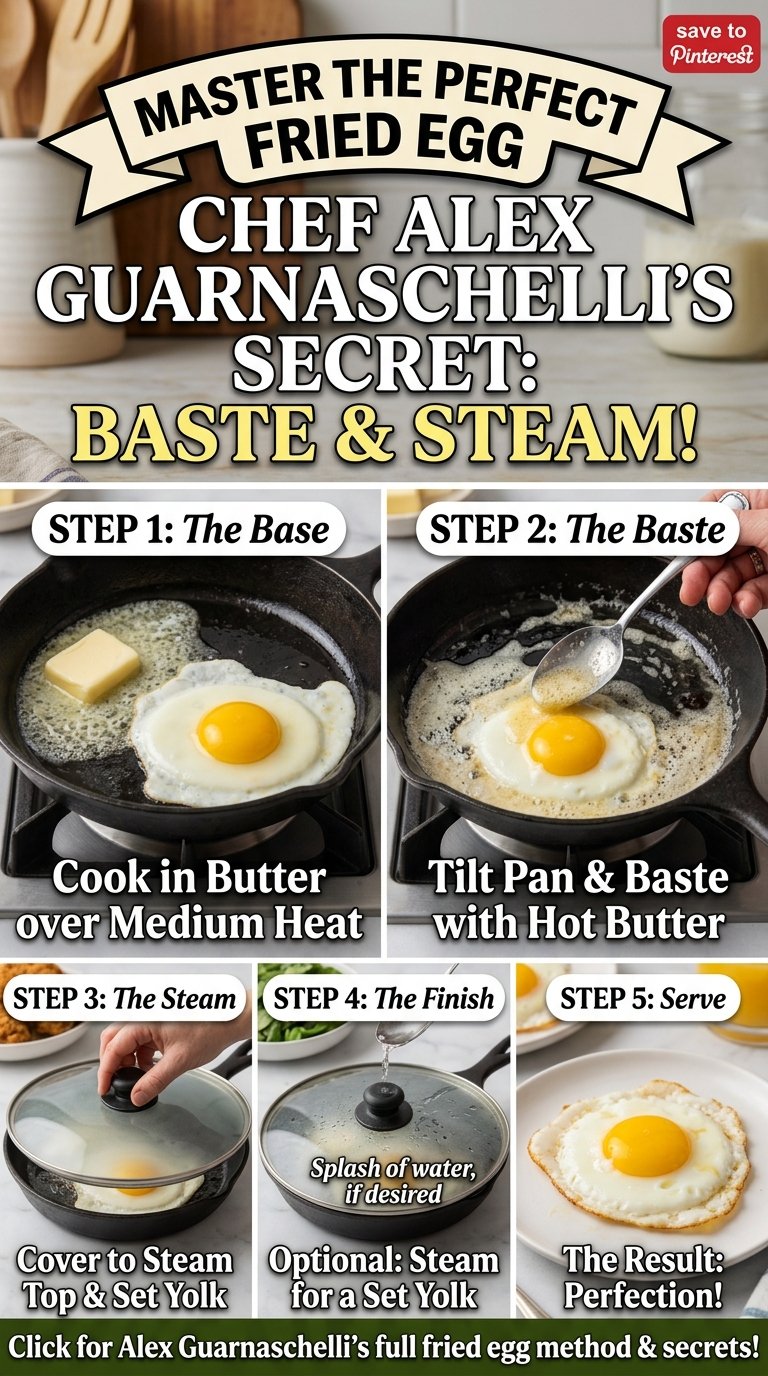
Place your seasoned cast-iron skillet or carbon steel pan over medium-high heat. Allow the pan to preheat thoroughly for 2 to 3 minutes. To test if the pan is ready, flick a few drops of water onto the surface; they should sizzle and dance across the pan before evaporating. This indicates your pan is primed for a perfect sear.
Step 3: Introduce the Fat
Add 1 to 1.5 tablespoons of unsalted butter (or your fat of choice) to the hot pan. Swirl the pan to coat the bottom evenly. The butter will melt and begin to foam. Watch the butter closely. Once the foam begins to subside and the butter turns a light golden color (emitting a warm, nutty aroma), it is time to cook.
Step 4: Slide and Sizzle
Bring your ramekin close to the surface of the pan and gently slide the egg into the center of the foaming butter. Immediately, you should hear a gentle, satisfying sizzle. The outer edges of the egg white should instantly begin to puff, bubble, and form small, airy pockets.
Step 5: The Basting Technique
This is where Chef Alex’s brilliance shines. Instead of flipping the egg (which risks breaking the delicate yolk and hides those beautiful crispy edges on the underside), we use the spoon-basting technique.
Gently tilt your skillet toward you so that the hot, foaming butter pools at the bottom edge of the pan. Using a large spoon, scoop up some of this hot butter and spoon it directly over the thick, translucent whites surrounding the yolk. Do not spoon the hot butter directly onto the center of the yolk, as this will cloud the yolk over with a white film, hiding its rich color. Continue to spoon the hot fat over the whites. This cooks them from the top down, ensuring they set completely while leaving the yolk raw, warm, and wonderfully runny.
Step 6: Seasoning and Finishing
As the egg cooks, season it gently with a pinch of flaky sea salt and freshly cracked black pepper. The flaky salt provides a subtle, crunchy texture that complements the crispy edges. The total cooking time should take no more than 2 to 3 minutes. The edges should be a beautiful, deep golden-brown lace, the whites completely set and opaque, and the yolk sitting proud, warm, and fully liquid.
Step 7: Slide and Serve
Slide your thin spatula gently beneath the egg, ensuring you support the weight of the yolk. Transfer the egg immediately to a warm plate. Serve alongside crusty sourdough toast, over a bed of sautéed greens, or on top of a classic breakfast hash.
Troubleshooting Your Fried Eggs
Even with a masterful technique, cooking can present unexpected challenges. Here is how to troubleshoot and correct the most common fried egg mistakes.
Problem: The egg white is rubbery and tough.
Cause: Your pan was too hot for too long, or you overcooked the egg. High temperatures cause the protein bonds in the white to contract too tightly, squeezing out all moisture.
Solution: Lower your burner temperature slightly. Once the initial sizzle has created those beautiful crispy edges, reduce the heat to medium-low and use the spoon-basting technique to cook the whites gently without exposing them to prolonged, intense heat.
Problem: The yolk is cloudy or completely cooked through.
Cause: You either flipped the egg and left it face-down for too long, or you basted the hot fat directly over the yolk, cooking the outer layer of yolk protein.
Solution: Focus your basting efforts strictly on the thickest parts of the egg whites. Avoid pouring hot fat directly over the yolk. If you prefer to flip your eggs (Over-Easy), cook them on the second side for no more than 10 to 15 seconds before removing them from the pan.
Problem: The egg is sticking to the pan and tearing.
Cause: The pan was not properly seasoned, did not have enough fat, or was not sufficiently preheated before the egg was added.
Solution: Ensure your cast iron or carbon steel pan has a well-established, non-stick seasoning patina. Always preheat your pan thoroughly before adding your cooking fat, and ensure you use a generous tablespoon of butter or oil. The egg must float slightly on a layer of fat to glide effortlessly.
Problem: The white near the yolk is slimy and undercooked.
Cause: The heat was too low, or you did not baste the egg. The thicker part of the white closest to the yolk takes the longest to cook through.
Solution: Use the spoon-basting method to splash hot fat over that specific stubborn ring of egg white. Alternatively, you can place a tight-fitting lid over the pan for the last 30 seconds of cooking, adding a teaspoon of water to create steam that will cook the top of the whites perfectly.
Alternative Fried Egg Styles Explained
While Chef Alex Guarnaschelli’s crispy, basted fried egg is a culinary triumph, different occasions call for different styles of fried eggs. Understanding how to execute each style expands your culinary versatility.
1. Sunny-Side Up
A classic, picturesque style where the egg is never flipped and the yolk remains completely exposed, bright yellow, and runny. To master the classic sunny-side up egg without crispy edges, cook the egg over low, steady heat with a touch of butter. This slow process allows the whites to set completely from bottom to top without taking on any color or crispiness, leaving the yolk pristine and glossy.
2. Over-Easy
For those who love a runny yolk but want to ensure absolutely no slimy whites remain. To cook an over-easy egg, start by frying the egg as you would for sunny-side up. Once the bottom white is set, gently flip the egg over using a wide spatula. Cook on the second side for just 10 to 15 seconds—long enough to sear the top white but keep the yolk completely liquid.
3. Over-Medium
This style strikes a perfect balance. The egg is flipped and cooked on the second side for 30 to 45 seconds. The result is a fully set egg white and a yolk that is thick, warm, and jammy—creamy but no longer fully runny. This is an ideal style for sandwiches, as it offers rich yolk flavor without dripping or making the bread soggy.
4. Over-Hard
In this style, both the white and the yolk are fully cooked through. The egg is flipped and cooked on the second side for 1 to 2 minutes, often with the yolk gently punctured with the spatula to ensure even cooking. While less decadent than a runny yolk, over-hard eggs are highly practical for portable breakfast wraps, lunch boxes, and kids’ meals.
5. Spanish-Style (Puntillas)
If you love crispy texture, this is the ultimate style. Heat a generous amount of extra virgin olive oil (about 1/4 inch deep) in a pan until it is shimmering and slightly smoking. Slide the egg in. The egg will puff up immediately, creating deeply browned, ruffled, ultra-crispy edges called puntillas. Spoon the hot oil over the top of the egg to cook it in under a minute.
Elevating Your Fried Eggs: Flavor Variations and Pairing Ideas
Once you have mastered the foundational cooking technique, you can begin experimenting with creative toppings, seasonings, and global flavor profiles to transform your simple fried egg into a gourmet meal.
1. The Chili Crisp Upgrade
For an instant burst of heat, texture, and umami, cook your egg in a tablespoon of Sichuan chili crisp oil instead of butter. The chili flakes, garlic, and shallots in the oil will fry alongside the egg whites, creating an incredibly aromatic, spicy, and crunchy crust that pairs beautifully with a bowl of steamed white rice or ramen.
2. Pesto Eggs
A viral culinary sensation that delivers incredible flavor. Instead of using cooking oil or butter, spread two tablespoons of high-quality basil pesto directly onto the bottom of a cold pan over medium heat. As the pan heats, the oil in the pesto will separate, allowing you to fry the egg directly in the fragrant mixture of basil, garlic, parmesan, and pine nuts.
3. Cumin and Smoked Paprika Crispy Egg
Add a pinch of ground cumin and smoked Spanish paprika to your melting butter before sliding the egg into the pan. The hot fat will bloom the spices, releasing their deep, smoky aroma and staining the egg whites a beautiful golden-orange color. Serve this egg over warm black beans, avocado, and fresh corn tortillas for an incredible huevos rancheros-style breakfast.
4. Herb-Infused Butter Eggs
Add fresh woody herbs like thyme, rosemary, or sage directly to the foaming butter before cooking your egg. The butter will absorb the essential oils of the herbs, imparting a subtle, earthy, and sophisticated flavor profile to your fried egg. This variation is particularly delicious when served over a warm grain bowl or a slice of toasted brioche.
Frequently Asked Questions (FAQs)
Is it better to fry eggs in butter or oil?
Both have their merits. Butter contains milk solids that caramelize, providing a rich, nutty, and savory flavor profile that is unmatched. However, butter burns easily. Oils, particularly extra virgin olive oil or avocado oil, have higher smoke points, allowing you to get the pan hotter for crisper, lacier edges without burning. Choose butter for rich flavor, and oil for maximum crispiness.
Why do my fried eggs always stick to the pan?
Sticking is usually caused by two factors: a pan that wasn’t properly preheated, or an inadequate amount of cooking fat. Always allow your pan to heat up before adding your fat, and ensure the fat is hot and foaming before the egg touches the surface. If using cast iron or carbon steel, ensure the pan is well-seasoned.
How do I cook a fried egg without flipping it?
You can easily cook a fried egg without flipping by using the spoon-basting method. Tilt your pan slightly and spoon the hot cooking fat over the thick whites surrounding the yolk until they are set and opaque. Alternatively, you can add a teaspoon of water to the pan and cover it with a lid for the final 30 seconds of cooking to steam the top of the egg.
Are runny egg yolks safe to eat?
For most healthy individuals, consuming runny egg yolks carries a very low risk of foodborne illness, especially when using fresh, high-quality, properly refrigerated eggs. However, pregnant women, elderly individuals, and those with compromised immune systems should consume fully cooked yolks (Over-Hard) to minimize any risk of Salmonella.
How can I tell if my eggs are fresh enough for frying?
You can perform the simple “float test.” Place your egg in a bowl of cold water. Fresh eggs will sink to the bottom and lay flat on their side. Older eggs will stand upright on the bottom or float to the top due to the expanding air pocket inside the shell. Eggs that float should be discarded or saved for hard-boiling, while eggs that sink flat are perfect for frying.
Conclusion: The Path to Egg Mastery
Cooking is an art form where simple ingredients are transformed through precision, technique, and a deep understanding of culinary science. Chef Alex Guarnaschelli’s method for cooking the perfect fried egg reminds us that even the most basic kitchen tasks deserve our full attention and respect.
By selecting a high-quality pan, understanding the science of protein coagulation, choosing the right fat, and mastering the elegant French technique of spoon-basting, you can elevate a humble egg into a luxurious, multi-textured masterpiece. Step into your kitchen, preheat your skillet, listen for that beautiful initial sizzle, and enjoy the process of turning a simple breakfast staple into an extraordinary culinary experience.