The Ultimate Gourmet Blistered Tomato Toast on Sourdough: A Masterclass in Simple Summer Cooking
When the sun-drenched days of summer arrive, our culinary desires shift away from heavy, complex meals toward dishes that celebrate the pure, unadulterated essence of fresh produce. There is perhaps no single dish that encapsulates this culinary philosophy better than blistered tomato toast. Built upon a foundation of thick, crusty, artisanal sourdough bread, layered with rich extra virgin olive oil, sweet caramelized garlic, and jammy, bursting cherry tomatoes, this dish is a sensory revelation. It is sweet, tangy, savory, and satisfyingly crunchy all at once.
Despite its simplicity, creating a truly world-class blistered tomato toast requires an understanding of ingredient synergy, heat control, and culinary technique. In this comprehensive, ultra-detailed guide, we will unpack the science behind blistering tomatoes, explore the anatomy of the perfect slice of toast, provide a foolproof master recipe, and offer gourmet variations that will elevate your breakfast, lunch, or dinner to Michelin-star heights. Whether you are an experienced home cook or a culinary novice, this masterclass will transform the way you approach simple, seasonal ingredients.
Section 1: The Culinary Science of Blistering Tomatoes
To cook is to engage in a series of chemical reactions. When we talk about “blistering” tomatoes, we are not simply warming them up; we are systematically altering their structural and chemical makeup to maximize flavor extraction. Understanding this process allows you to control the final texture and taste profile of your toast toppings.
The Structure of Cherry and Grape Tomatoes
Cherry and grape tomatoes are ideal for blistering due to their high surface-area-to-volume ratio and relatively thick skins. These small cultivars contain high concentrations of natural sugars (fructose and glucose) and acids (malic and citric acid) suspended within a water-rich cellular matrix. The skin of the tomato acts as a natural pressure cooker, trapping steam and juices inside as heat is applied.
The Maillard Reaction vs. Caramelization
When you place cherry tomatoes into a hot pan with a fat source like olive oil, two distinct chemical transformations begin to occur:
- The Maillard Reaction: This is a chemical reaction between amino acids and reducing sugars that occurs at temperatures above 285°F (140°C). As the exterior skin of the tomato makes direct contact with the hot, oiled pan, it undergoes rapid browning, creating complex, savory flavor compounds that are deep and earthy.
- Caramelization: Unlike the Maillard reaction, caramelization is a pyrolytic process that involves only sugars. It occurs at temperatures above 320°F (160°C). As the tomatoes heat up, their internal sugars begin to break down, releasing volatile compounds that impart a signature sweet, buttery, and nutty aroma.
Pectin Breakdown and Moisture Release
As the internal temperature of the tomato reaches approximately 140°F (60°C), the heat begins to break down the hemicellulose and pectin in the cell walls. This softens the flesh of the tomato. Eventually, the steam built up inside the tomato causes the skin to crack and “blister.” At this precise moment, the sweet, acid-rich juices escape into the pan, mixing with the olive oil and garlic to form a luxurious, emulsified pan sauce. If you cook them too quickly on low heat, they will simply turn mushy and lose their structural integrity without developing that essential charred exterior flavor.
—
Section 2: The Anatomy of the Perfect Toast
A masterpiece is only as good as its canvas. In the realm of tomato toasts, the bread is not merely a vehicle; it is a foundational component that must provide structural support, textural contrast, and a complementary flavor profile. Let’s break down the components of the ultimate toast assembly.
Choosing the Bread: Why Sourdough Reigns Supreme
While you can use virtually any bread, a wild-yeast, naturally leavened sourdough is the gold standard for blistered tomato toast for several key reasons:
| Bread Quality | Why It Matters for Tomato Toast |
|---|---|
| Structural Integrity | The open, chewy crumb and thick, rustic crust of sourdough can absorb the warm, acidic juices of the blistered tomatoes without collapsing into a soggy mess. |
| Flavor Contrast | The signature lactic and acetic acid tang of sourdough perfectly balances the natural sweetness of caramelized cherry tomatoes and the rich, fatty notes of extra virgin olive oil. |
| Maillard Potential | Sourdough’s complex sugar profile browns beautifully when exposed to high heat in a pan or under a broiler, creating a deeply caramelized, crispy surface. |
Other Acceptable Bread Varieties
If high-quality sourdough is unavailable, look for these rustic alternatives:
- Ciabatta: Known for its highly hydrated dough and massive air pockets, ciabatta is excellent for trapping pools of olive oil and tomato juices. It yields a lighter, crunchier bite.
- Country Boule: A classic French-style yeast bread that offers a milder flavor than sourdough but still boasts a thick, robust crust.
- Pane di Casa: A traditional Italian hearth bread that provides a dense, sturdy structure ideal for heavy toppings.
The Toasting Technique: Pan-Searing vs. Broiling vs. Grilling
How you heat your bread dictates the entire eating experience. For this recipe, we highly recommend the cast-iron pan-searing method or grilling over open flame.
To toast your bread in a pan, heat a generous splash of olive oil over medium-high heat. Place the bread slice directly into the pan and press down gently to ensure even contact. Fry until a golden-brown crust forms, then flip and toast the other side. This method creates a “shatter-crisp” exterior while keeping the interior crumb soft and pillowy. Crucially, as soon as the hot bread comes out of the pan, rub a raw, peeled clove of garlic across the rough surface of the crust. The hot bread will act like a grater, melting the raw garlic directly into the crumb for an irreplaceable aromatic depth.
—
Section 3: The Ingredient Deep Dive
Because this recipe relies on so few ingredients, the quality of each component is of paramount importance. Let’s look at how to select and prepare your ingredients like a professional chef.
1. Tomatoes: Cherry vs. Grape vs. Heirloom Medley
For blistering, small-format tomatoes are non-negotiable. Large tomatoes contain too much liquid and will collapse into a watery soup before they blister properly.
- Cherry Tomatoes: Typically round, with a thin skin and high sugar content. They burst easily, releasing sweet, sweet juices. Excellent varieties include Sungold (sweet and tropical) and Sweet 100s.
- Grape Tomatoes: More oblong and oval, grape tomatoes have thicker skins and a meatier flesh. They hold their shape slightly better under high heat and provide a wonderful chewiness to the final dish.
- Heirloom Medleys: Using a mix of yellow, orange, dark red, and purple cherry tomatoes not only creates a stunning visual presentation but also introduces a complex spectrum of acidity and sweetness to the dish.
2. The Liquid Gold: Selecting Your Extra Virgin Olive Oil (EVOO)
Olive oil serves two functions in this recipe: it is the cooking medium for the tomatoes and a key flavor element of the final dish. Do not use generic vegetable or canola oils here; they offer no flavor. Instead, reach for a high-quality, cold-pressed Extra Virgin Olive Oil.
For the cooking process, a robust, fruity olive oil from Spain or Italy works beautifully. It can handle medium-high cooking temperatures for the short duration required to blister tomatoes. For the final drizzle, choose an ultra-premium, estate-bottled EVOO with a peppery finish (common in Tuscan oils). This peppery note is caused by polyphenols, which act as a natural flavor enhancer when combined with the sweetness of the tomatoes.
3. Garlic: Freshness is Paramount
Garlic is the aromatic backbone of this recipe. Never use pre-peeled or jarred minced garlic; these products have lost their volatile oils and often carry a metallic, bitter, or flat taste. Use fresh, firm heads of garlic. For this recipe, we will slice the garlic thinly rather than mincing it. Thinly sliced garlic (sometimes called garlic chips) browns more slowly and evenly than minced garlic, reducing the risk of burning and turning bitter during the blistering process.
4. Salt and Acid: The Flavour Enhancers
The relationship between salt, acid, and tomato flavor is a culinary marvel. Sodium ions enhance our tongue’s perception of sweetness and suppress bitterness, unlocking the deep flavor compounds of the tomato. Always use a high-quality sea salt or kosher salt during the cooking process. For the finishing touch, use flaky sea salt (such as Maldon) to add a delicate crunch and burst of salinity.
To balance the intense sweetness of caramelized tomatoes, a splash of acid is essential. A splash of high-quality aged balsamic vinegar, white wine vinegar, or a squeeze of fresh lemon juice added at the very end of the cooking process brightens the entire flavor profile, cutting through the richness of the olive oil.
—
Section 4: The Step-by-Step Master Recipe
Now that we have covered the science and ingredient selection, let’s step into the kitchen. This master recipe is designed to yield perfect blistered tomato toast every single time.
Equipment Needed:
- A 10-inch or 12-inch heavy-bottomed skillet (Cast iron or carbon steel is highly recommended for heat retention and browning).
- A sturdy wooden spoon or silicone spatula.
- A chef’s knife and cutting board.
- A bread knife.
Ingredients (Serves 2):
- Cherry/Grape Tomatoes: 2 cups (approx. 12 ounces / 340 grams), washed and thoroughly dried.
- Artisanal Sourdough Bread: 2 thick slices (cut about 3/4-inch to 1-inch thick).
- Garlic: 3 large cloves. (2 sliced paper-thin, 1 left whole and peeled for rubbing on the bread).
- Extra Virgin Olive Oil: 3 tablespoons (plus more for brushing the bread).
- Fresh Herbs: 1/4 cup of fresh sweet basil leaves (gently torn or sliced into ribbon-like strips/chiffonade) and/or fresh thyme sprigs.
- Acid: 1 teaspoon of high-quality aged balsamic vinegar or freshly squeezed lemon juice.
- Salt & Pepper: Kosher salt and freshly cracked black pepper to taste.
- Finishing Touches: Flaky sea salt and red pepper flakes (optional, for a subtle spicy kick).
Step-by-Step Instructions:
Step 1: Prep Your Tomatoes and Aromatics
Ensure your cherry tomatoes are completely dry before cooking. Any excess water on the skins will create steam in the pan, preventing the oil from making clean contact and hindering the blistering process. Slice two of your garlic cloves into paper-thin slices and set them aside. Keep the third garlic clove whole and peeled; this will be your garlic wand for the bread.
Step 2: Sear the Sourdough
Heat your skillet over medium-high heat. Brush both sides of your sourdough slices generously with extra virgin olive oil. Place the bread into the dry, hot skillet. Toast for 2 to 3 minutes per side, applying light pressure with a spatula, until the bread is golden brown with deep, charred spots. Remove the bread from the skillet and immediately rub one side of each hot slice with the whole, raw garlic clove. The garlic will melt into the warm nooks and crannies of the crust. Set the toast aside on a wire rack to prevent the bottom from getting soggy.
Step 3: Blister the Tomatoes
Turn the heat under your skillet down to medium. Add 3 tablespoons of extra virgin olive oil to the pan. Once the oil is shimmering but not smoking, add the dry cherry tomatoes in a single, even layer. Let the tomatoes cook undisturbed for 2 to 3 minutes. You want them to make prolonged contact with the hot pan to develop those deep, dark charred blister spots.
Step 4: Toss and Add Aromatic Garlic
Once the bottom of the tomatoes begin to blacken and split, give the pan a gentle shake or use your wooden spoon to roll them over. Add the thinly sliced garlic and a few sprigs of fresh thyme (if using) to the pan, nestling them into the spaces between the tomatoes. Season generously with a pinch of kosher salt and freshly cracked black pepper. Reduce the heat to medium-low. Cook for another 3 to 4 minutes, stirring occasionally, until the garlic is golden and translucent, and most of the tomatoes have collapsed, releasing their juices to create a thick, glossy sauce with the olive oil.
Step 5: Finish with Acid and Herbs
Remove the pan from the heat. Discard any woody thyme stems. Drizzle the balsamic vinegar or fresh lemon juice directly into the pan, stirring gently to incorporate it into the warm tomato juices. Fold in half of your torn fresh basil leaves; the residual heat will wilt them slightly and release their sweet, anise-like oils into the sauce.
Step 6: Assemble and Serve
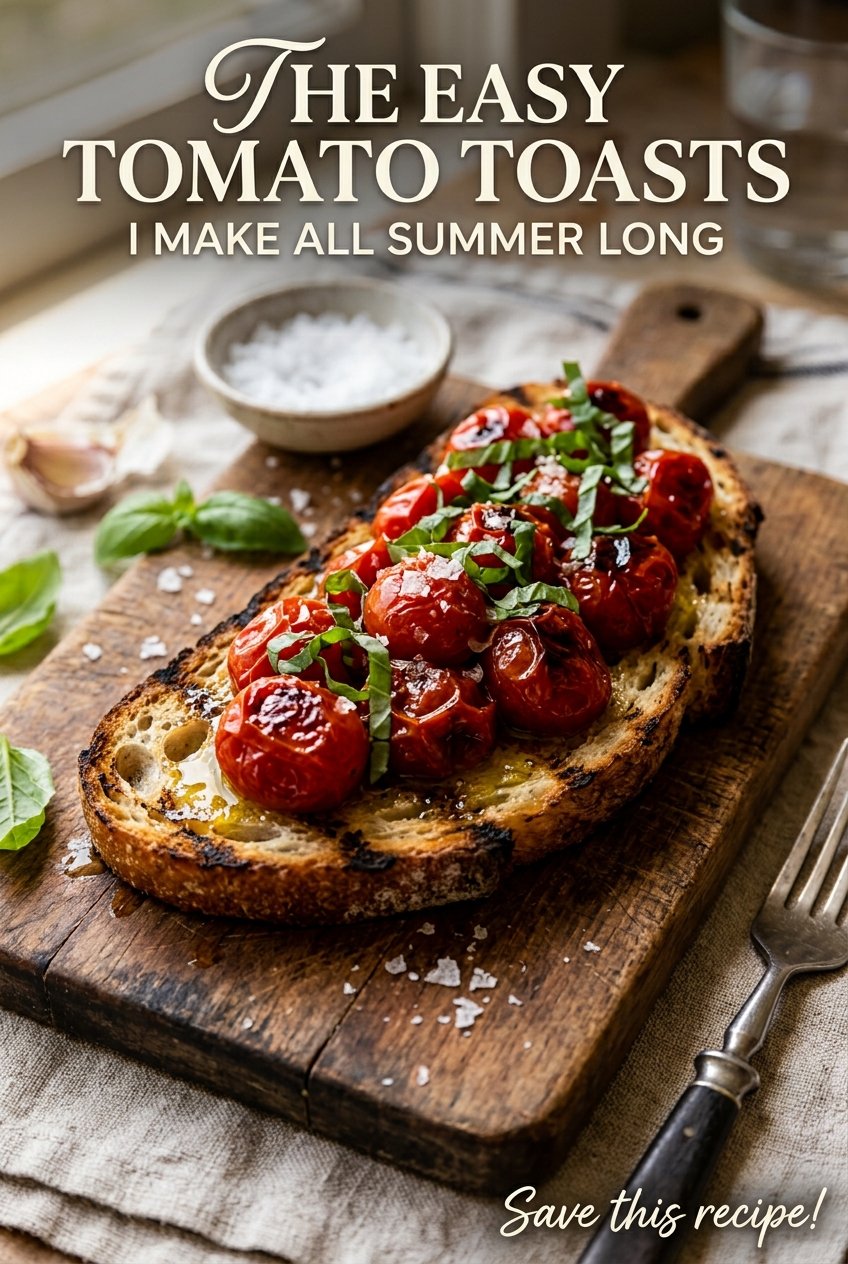
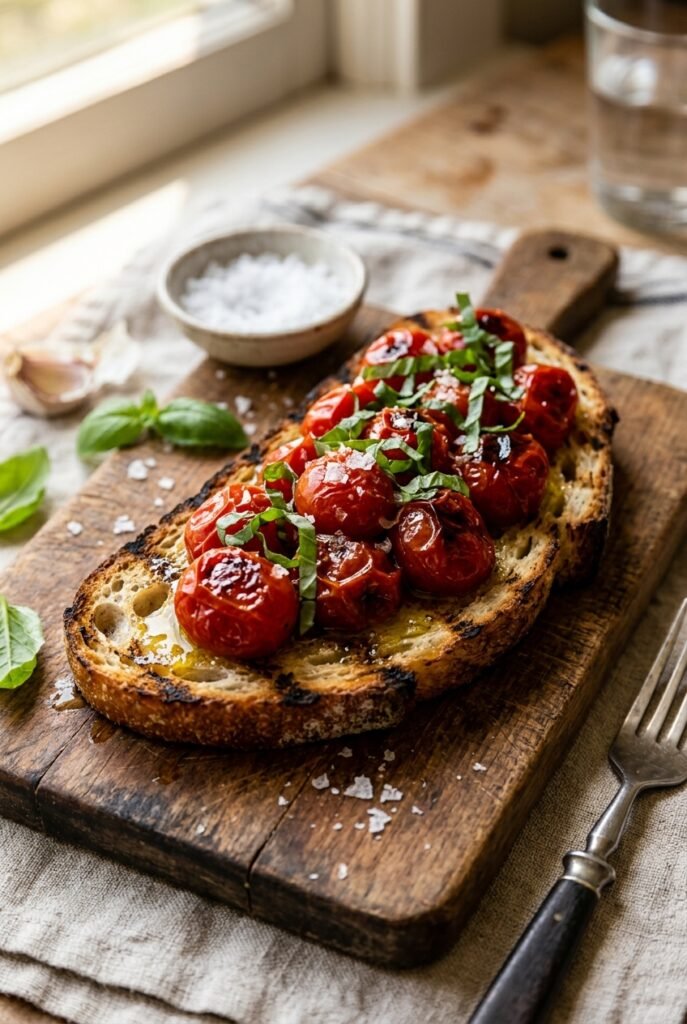
Place your garlic-rubbed sourdough slices onto serving plates. Using a spoon, carefully scoop the warm, jammy blistered tomatoes and their glossy garlic-infused pan juices onto the bread. Ensure you distribute the juices evenly so they soak into the crust. Garnish with the remaining fresh basil, a pinch of red pepper flakes for heat, and a generous sprinkle of flaky sea salt. Serve immediately while warm.
—
Section 5: Elevating Your Toast: Gourmet Variations
While the master recipe is a triumph of simplicity, it also serves as an excellent foundation for customization. Here are several chef-approved variations to take your blistered tomato toast to the next level.
1. The Creamy Whipped Ricotta Base
For a rich, luxurious mouthfeel, add a layer of whipped ricotta to the sourdough before spooning the hot tomatoes on top. The cool, creamy cheese contrasts beautifully with the warm, acidic tomatoes.
- How to make it: In a food processor, blend 1 cup of whole-milk ricotta, 1 tablespoon of extra virgin olive oil, 1 teaspoon of lemon zest, a pinch of salt, and a splash of heavy cream until completely smooth and airy. Spread a thick layer of this whipped cheese onto your warm garlic toast before topping with the blistered tomatoes.
2. The Burrata and Pesto Extravaganza
Perhaps the most popular modern variation, this combination is a certified crowd-pleaser that brings classic Caprese flavors to life.
- How to make it: Spread a tablespoon of vibrant, fresh basil pesto onto the garlic toast. Tear open a fresh ball of burrata cheese and arrange it over the pesto. Top with the piping-hot blistered tomatoes. The heat of the tomatoes will gently melt the rich, creamy stracciatella interior of the burrata, creating an incredibly decadent dish.
3. The Mediterranean Olive & Feta Twist
For a salty, briny flavor profile reminiscent of the Greek islands, incorporate classic Mediterranean ingredients into the pan.
- How to make it: When adding the garlic to the pan with the tomatoes, toss in 1/4 cup of pitted, halved Kalamata olives and 1 tablespoon of drained capers. Once assembled on the bread, crumble high-quality French or Greek sheep’s milk feta cheese over the top and finish with a dusting of dried wild oregano.
4. The High-Protein Poached Egg & Avocado Option
Turn your blistered tomato toast into a complete, balanced, and highly nutritious meal by adding healthy fats and protein.
- How to make it: Mash half an avocado with a squeeze of lime juice and a pinch of salt directly onto your toast. Top with the blistered tomatoes, then crown the dish with a perfectly poached egg. When cut, the warm, runny yolk will mingle with the tomato juices to create a rich, luxurious sauce.
5. The Vegan Creamy Cashew Spread
If you avoid dairy but still crave a rich, creamy element, a homemade cashew-based cheese spread is an extraordinary substitute.
- How to make it: Soak 1 cup of raw cashews in boiling water for 30 minutes, then drain. Blend the cashews in a high-speed blender with 1/4 cup of water, 1 tablespoon of nutritional yeast, 1 teaspoon of lemon juice, 1 small garlic clove, and a pinch of salt until velvety smooth. Spread generously onto the toast.
—
Section 6: Troubleshooting & Professional Chef Tips
Even simple recipes can go awry if small details are overlooked. Here are the most common pitfalls home cooks face when making blistered tomato toast, along with quick and easy solutions.
Soggy Toast Syndrome
- The Problem: The toast becomes soggy and falls apart under the weight of the tomatoes within minutes of serving.
- The Fix: There are three ways to prevent this. First, ensure you cut your sourdough thick enough (at least 3/4-inch). Second, toast the bread thoroughly until it has a hard, protective crust on the surface. Third, you can create a moisture barrier. Spreading a thin layer of fat, such as a smear of butter, a drizzle of olive oil, or a layer of cream cheese/ricotta/avocado, creates a hydrophobic barrier that prevents the watery tomato juices from immediately penetrating and softening the bread fibers.
Burnt, Bitter Garlic
- The Problem: The garlic turns black or dark brown during cooking, leaving a bitter, acrid taste that ruins the dish.
- The Fix: Timing is everything. Garlic contains high amounts of volatile sugars that burn easily. Never add garlic to the pan at the same time as the raw tomatoes. Always blister the tomatoes first for a few minutes, then add your sliced garlic when the heat has been reduced and the tomatoes are starting to release their juices. The liquid in the pan will help regulate the temperature and prevent the garlic from burning.
Sour or Flat Tomatoes
- The Problem: Out-of-season tomatoes lack flavor, resulting in a bland or overly sour toast.
- The Fix: If you are making this dish in the winter or spring using less-than-stellar grocery store tomatoes, you can easily rescue them in the pan. Add a pinch of granulated sugar or a drizzle of honey to the pan along with the salt to enhance their natural sweetness. Additionally, a splash of high-quality aged balsamic vinegar can mimic the deep, complex acids found in peak-summer tomatoes.
—
Section 7: Nutritional Breakdown & Health Benefits
This gourmet meal is not just a delight for the tastebuds; it is also a powerhouse of nutrition. Let’s look at the health benefits of the key ingredients in blistered tomato toast.
Lycopene: The Antioxidant Powerhouse
Tomatoes are famously rich in lycopene, a powerful carotenoid antioxidant that has been linked to a reduced risk of heart disease and certain cancers. Interestingly, the bioavailability of lycopene increases significantly when tomatoes are cooked and consumed alongside a healthy fat source. The heat breaks down the plant cell walls, releasing the lycopene, while the lipid molecules in extra virgin olive oil help your body absorb this fat-soluble compound. Thus, blistered tomato toast is actually far more nutritious than raw tomato salad!
Healthy Fats for Heart Health
Extra virgin olive oil is the cornerstone of the Mediterranean diet. It is composed primarily of monounsaturated fatty acids, specifically oleic acid, which is known for its anti-inflammatory properties and beneficial effects on cholesterol levels. Combined with the polyphenols present in premium olive oil, this dish supports cardiovascular wellness and helps combat oxidative stress in the body.
Sourdough: A Friend to Your Gut
Sourdough bread undergoes a long fermentation process driven by wild yeasts and lactobacilli. This process breaks down much of the gluten and phytic acid present in wheat flour, making sourdough significantly easier to digest than standard commercial white bread. Sourdough also acts as a prebiotic, feeding the beneficial bacteria in your microbiome and promoting overall digestive health.
—
Section 8: Frequently Asked Questions (FAQs)
Q: Can I make blistered tomatoes in advance?
A: Absolutely. You can blister the tomatoes, let them cool to room temperature, and store them in an airtight container in the refrigerator for up to 4 days. When ready to use, simply reheat them gently in a skillet over low heat with a fresh splash of olive oil, or enjoy them cold over hot toast. The flavor actually deepens as they sit in the garlic-infused oil.
Q: Can I make this gluten-free?
A: Yes. Simply swap the traditional sourdough bread for your favorite high-quality gluten-free bread. Look for artisanal gluten-free loaves made with wild yeast or ancient grains to best replicate the structure and tang of traditional sourdough.
Q: What is the best pan to use if I don’t have cast iron?
A: A stainless steel pan is an excellent alternative. It conducts heat beautifully and allows you to monitor the color of the pan juices easily. Just be sure to use enough olive oil to prevent the tomatoes from sticking. Heavy-duty aluminum or carbon steel pans are also excellent choices.
Q: Can I use dried herbs instead of fresh?
A: While fresh basil and thyme are highly recommended for their vibrant flavor, you can use dried herbs in a pinch. If using dried oregano, thyme, or rosemary, add them to the hot olive oil along with the garlic to bloom them, which wakes up their essential oils. Avoid using dried basil, as it loses its sweet flavor and tastes dusty.
Q: Is blistered tomato toast suitable for meal prep?
A: While you can meal-prep the tomato mixture itself, you should always assemble the toast right before serving. If you pack assembled tomato toast in a lunchbox, it will inevitably become soggy and lose its delightful texture by lunchtime.
—
Conclusion: The Joy of Simple Pleasures
In a world of complex culinary trends and overcomplicated recipes, the humble blistered tomato toast stands as a reminder of the power of simple ingredients treated with care and respect. By selecting a crusty loaf of sourdough, high-quality extra virgin olive oil, and sweet, peak-summer cherry tomatoes, and applying the proper blistering technique, you can create a breakfast, appetizer, or quick dinner that rivals the flavors of any fine-dining restaurant.
Now, it is your turn to head into the kitchen. Fire up your skillet, let those gorgeous tomatoes pop, inhale the rich aroma of toasted garlic, and enjoy one of life’s greatest, most delicious culinary pleasures.